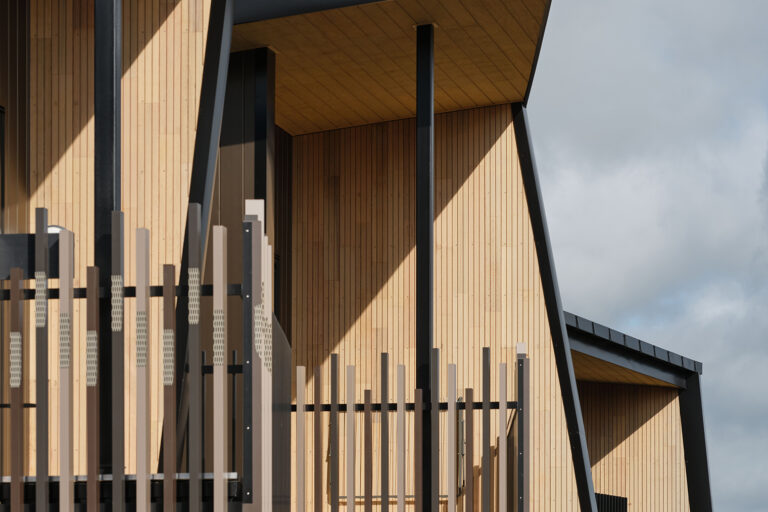
Shared outdoor spaces provide areas for play, gatherings, and connection, recognising the importance of communal living in Māori and Pacific cultures.
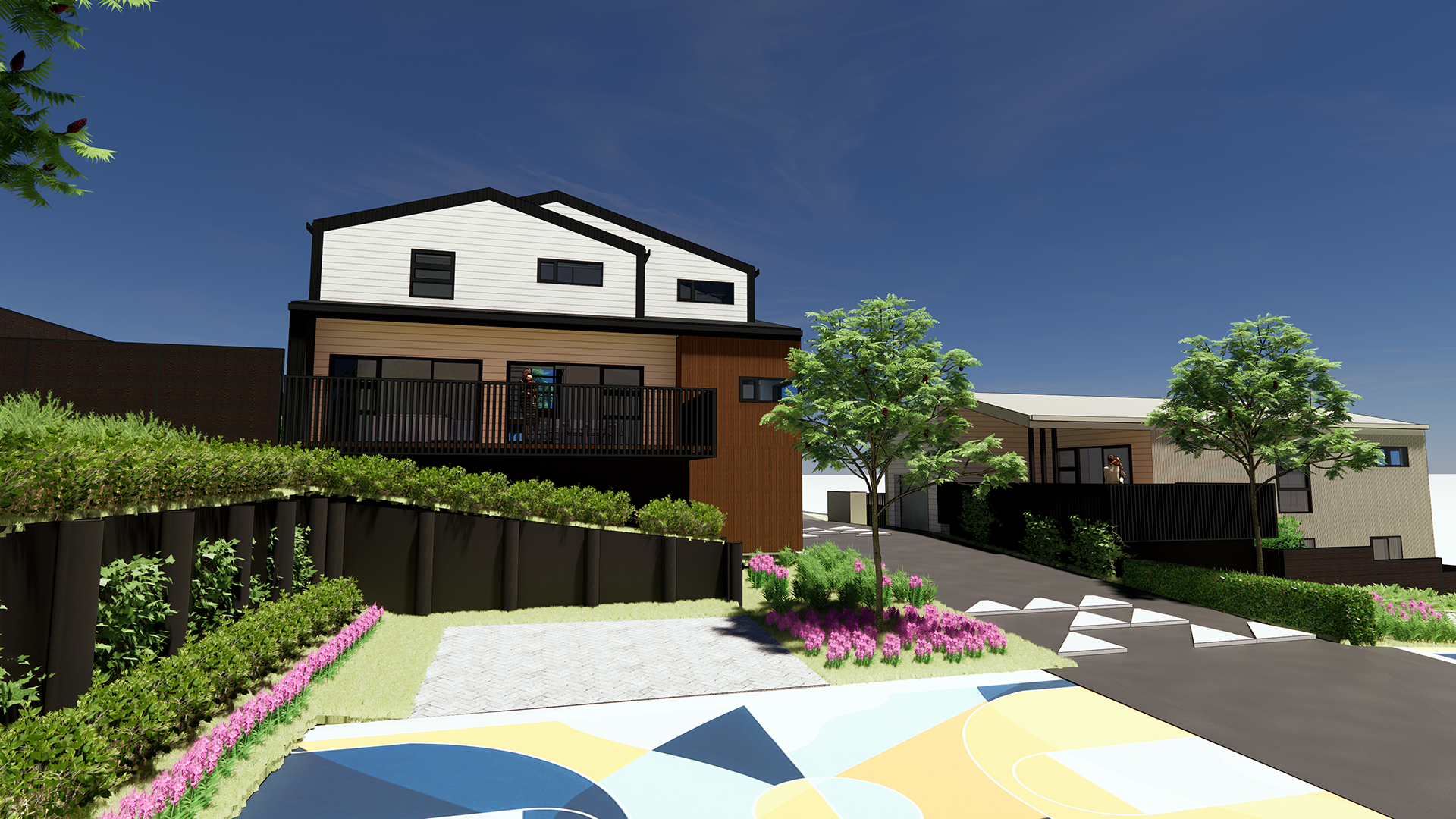
Ashton Mitchell’s work with Penina Trust has recently featured in a BRANZ research paper about multi-generational housing.
Ashton Mitchell were the Architects for the concept and resource consent design phase for this project, working alongside Oyster Workshop and PJM Projects.
Penina is the only Pacific Community Housing Provider in New Zealand. Their challenge was to develop a new model of housing which would better serve South Auckland’s pacific community, by allowing for extended families to all be able to live under one roof.
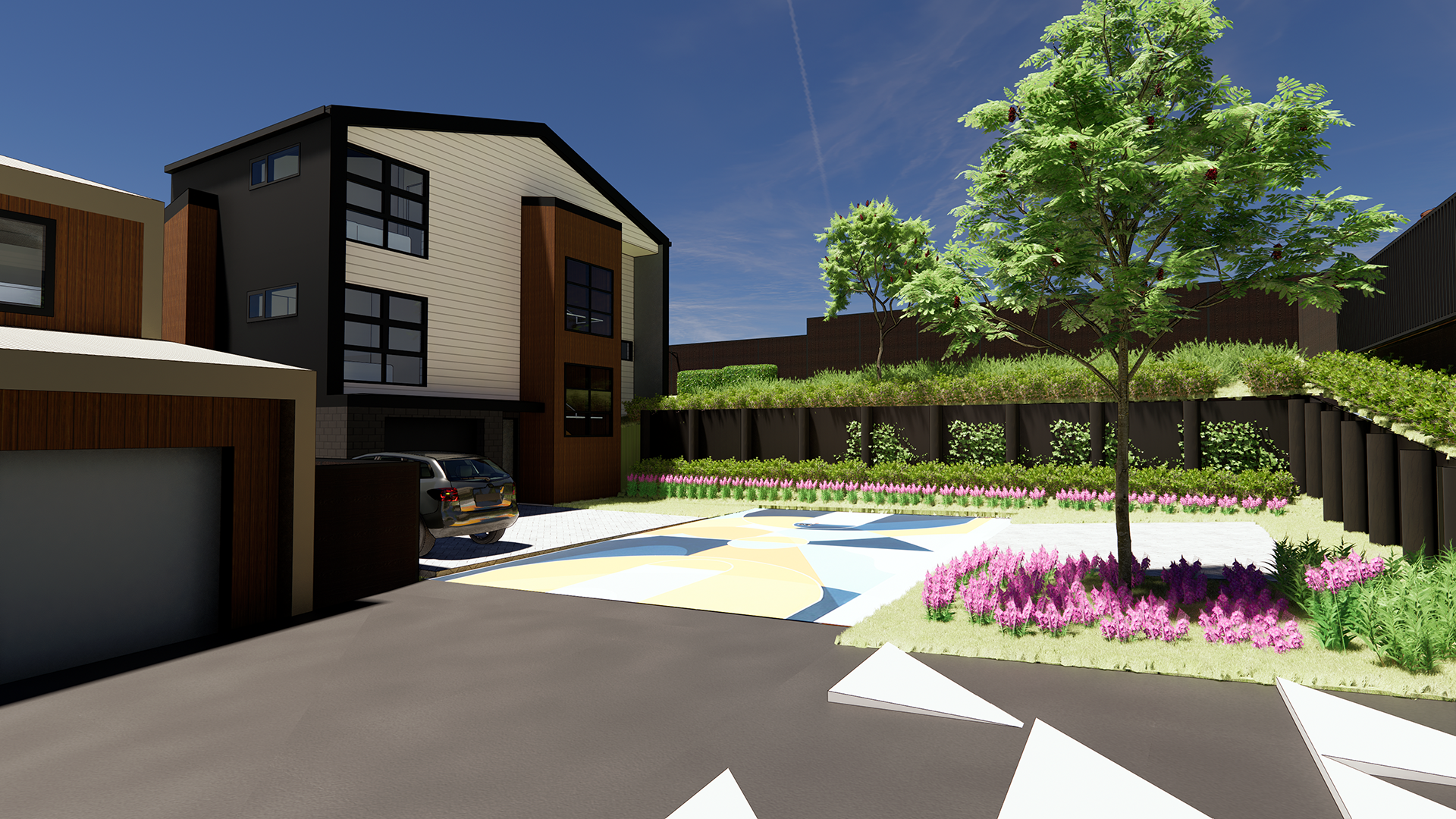
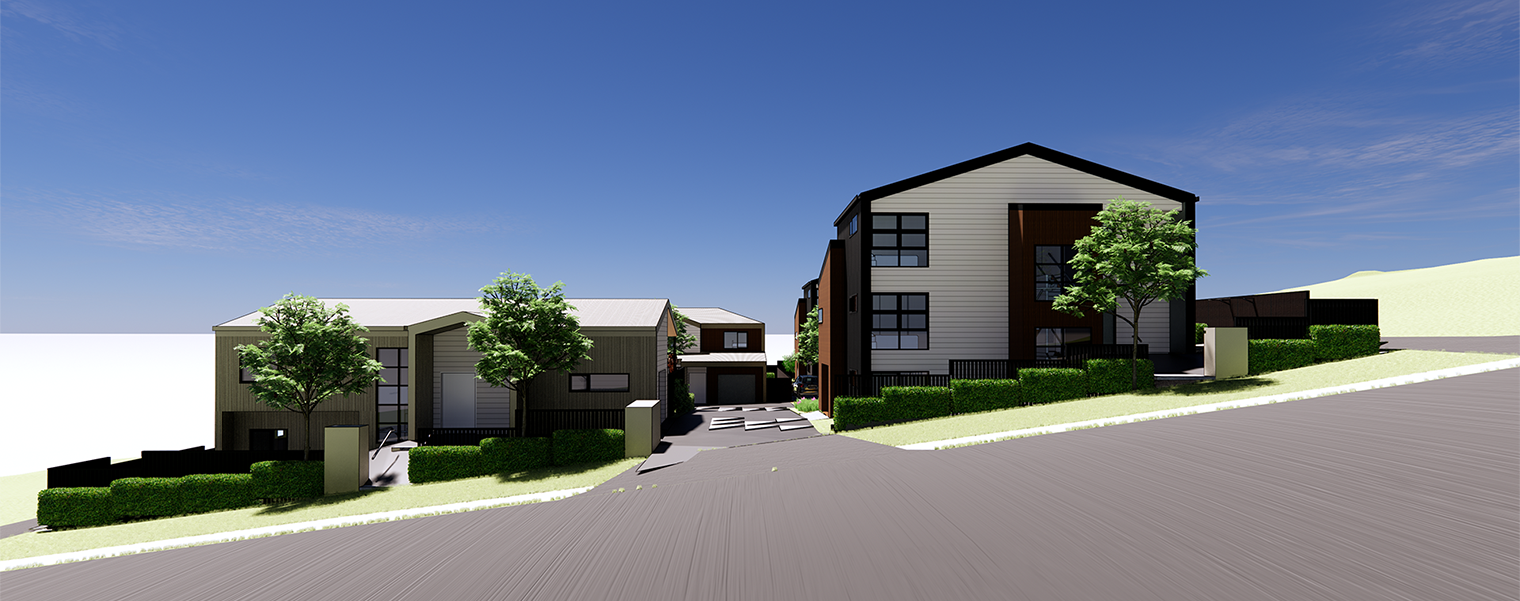
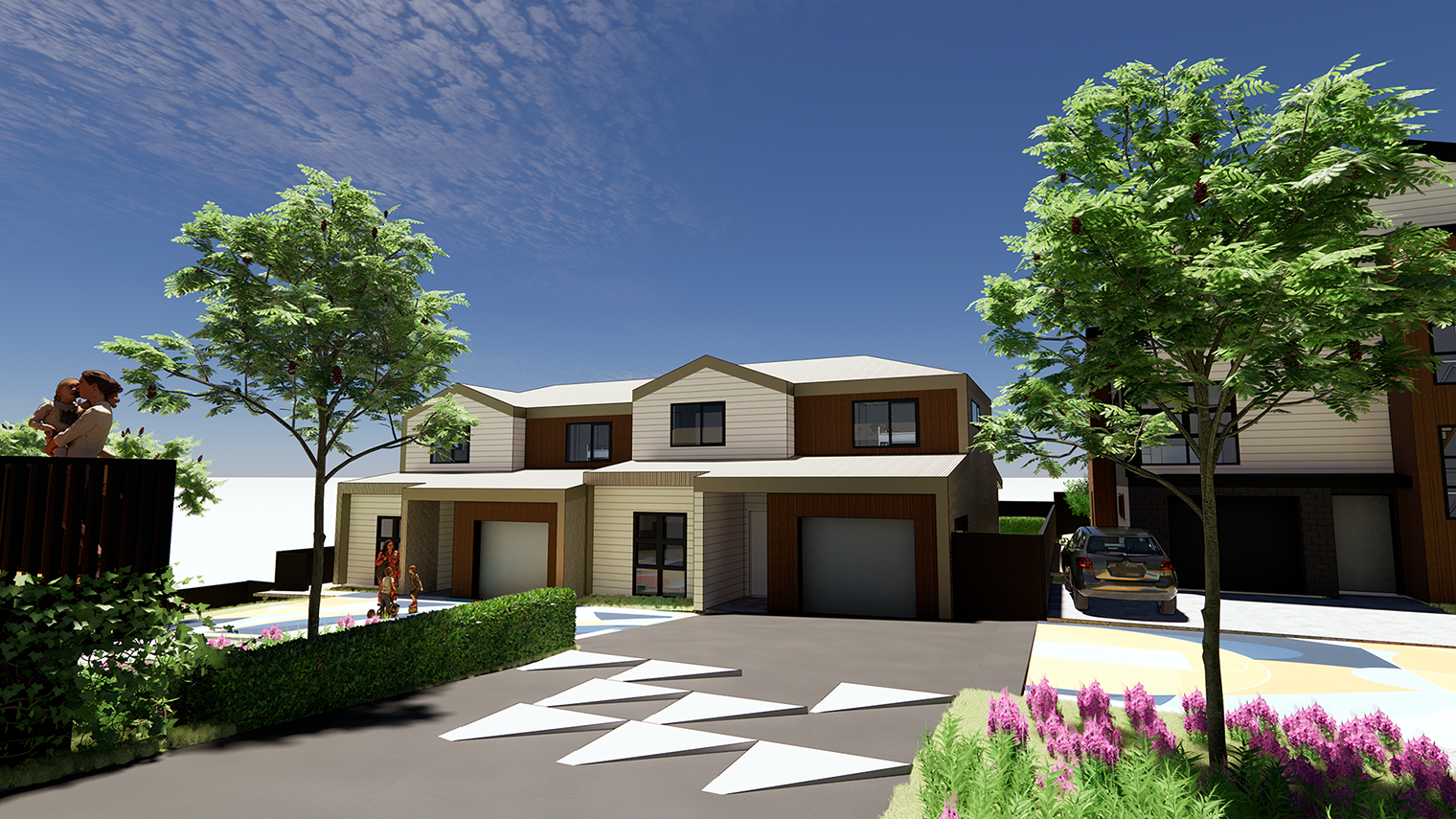
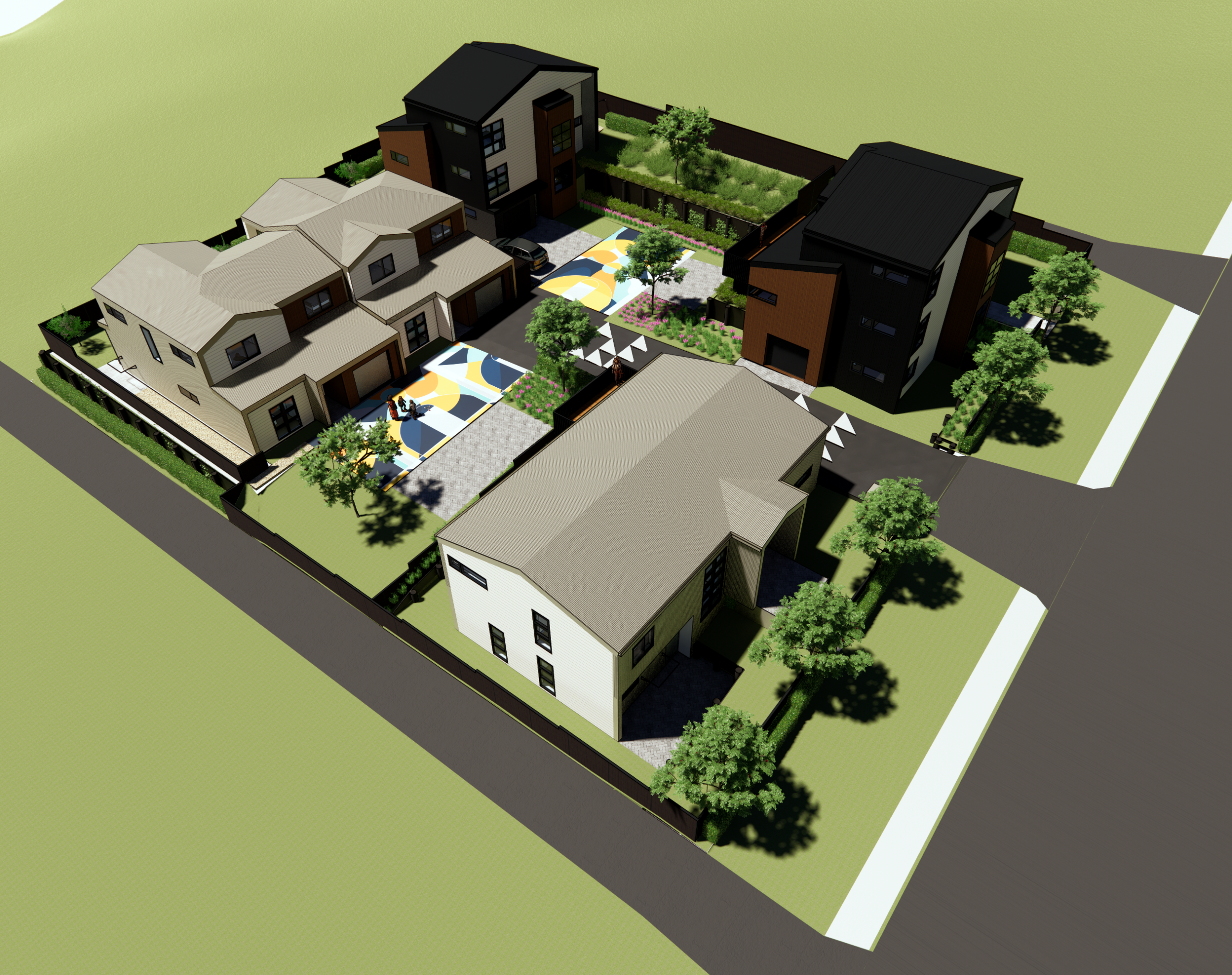
Our design response carefully balanced cultural, social, and planning considerations. Key to this was balancing the practical requirements of multi-generational living with tight site and planning constraints, ensuring the development could meet the needs of whānau now and in the future.
The architectural approach centres on flexibility and cultural responsiveness. Homes are designed to accommodate extended whānau arrangements, with generous living spaces, multiple kitchens, and ground-floor bedrooms with accessible bathrooms to support kaumātua and younger family members alike. Interior layouts allow for fluid household configurations, reflecting the cultural reality of whānau dynamics and fluctuating occupant numbers.
Site planning was equally critical. The dwellings are arranged to create a sense of community while maintaining privacy for individual households. Shared outdoor spaces provide areas for play, gatherings, and connection, recognising the importance of communal living in Māori and Pacific cultures. Considerations such as separate areas for tangihanga, and thoughtful separation of food preparation and living spaces, ensure the design respects cultural practices.
Penina Trust’s Papakura project demonstrates how thoughtful architectural solutions and strong collaboration can create housing that is culturally responsive, socially supportive, and future-ready. Ashton Mitchell is proud to have contributed to enabling this vision through design and planning expertise.